A water stain on the ceiling is one of the first warning signs a UAE villa gives you. It starts small — a faint brown ring in a corner, a damp patch above a doorway, a line of bubbling paint. Left alone, that mark grows, the plaster softens, and the repair gets more expensive every month. The stain itself is only the symptom. Water is reaching your ceiling from somewhere, and finding that source is the whole job.
This guide explains what a water stain on your ceiling really means, the causes we see most often in Dubai and Abu Dhabi villas, how to tell a roof leak apart from condensation, and what actually stops the problem for good.
What a water stain on the ceiling actually means
A ceiling stain is dried mineral residue. Water carries dust, salts and paint pigment as it soaks through the concrete slab and plasterboard, and when it dries it leaves a brown or yellow mark behind. That is why the stain is usually darker at the edges — the ring marks how far the water spread before it dried.
The important part: a stain means water has already travelled through your roof or wall structure. By the time you see it on the ceiling, the moisture has crossed the waterproofing layer, the screed and the slab. A small brown patch on the surface can sit above a much wider wet area you cannot see.
The common causes in a UAE villa
In this region, a water stain on the ceiling almost always comes from one of four sources:
- A failed or missing roof waterproofing layer. Most UAE villas have a flat concrete roof. When the waterproofing membrane cracks or was never applied properly, rain and even wash-down water sits on the slab and soaks through. This is the most common cause we find on a top-floor ceiling.
- Air-conditioning condensation. A blocked AC drain line or a poorly insulated duct in the ceiling void drips water onto the plasterboard. This produces a stain that appears in humid months with no rain at all — often near a bathroom, a hallway, or directly under an AC unit.
- A plumbing leak. A slow leak from a pipe in the floor above, or from a bathroom, leaves a stain on the ceiling below. If the stained ceiling is not the top floor, plumbing is the first thing to check.
- Roof gardens and irrigation. Many premium villas have planted terraces and roof landscaping. Constant irrigation keeps the slab wet, and without a sound waterproofing layer under the soil, that water eventually finds the ceiling below.
Roof leak or condensation: how to tell the difference
The cause changes the fix, so it is worth narrowing down before you call anyone. A few honest checks:
- When does it get worse? A roof leak grows during or just after rain. A condensation or AC stain gets worse in the hot, humid months and has nothing to do with rain.
- Where is it? A leak stain is usually on a top-floor ceiling, often in a corner or along a crease where the slab meets a wall. A stain directly under an AC unit or drain line points to condensation.
- What does it look like? A roof leak tends to leave a clear ring that spreads outward. A condensation problem shows more as a damp, spreading patch, sometimes with mould at the edge.
- Is the paint bubbling? Bubbling or flaking paint means water is sitting behind the surface, not just marking it. That is a sign the moisture has been there a while.
If the stained ceiling is on the top floor and gets worse after rain, the roof is the place to start. A leaking roof in Dubai follows a predictable pattern, and a proper inspection settles the question quickly.
Why UAE roofs stain ceilings differently
Generic advice written for cold climates does not fit a Dubai villa. There are no attics, no snow, and no freezing pipes here. The pressure on a UAE roof is different, and it is severe.
Roof surfaces in the UAE reach 80 °C in summer. That heat expands and contracts the concrete slab and the waterproofing on it, day after day. A cheap or aged membrane becomes brittle, cracks, and loses its bond. Then the rain arrives — rare, but heavy when it comes — and water pushes straight through those cracks into the slab. The National Center of Meteorology records how quickly a dry spell can turn into an intense downpour, and a roof that survived years of heat can fail in a single storm.
Add year-round AC condensation and roof irrigation, and a UAE ceiling is under water pressure almost every month of the year, not only in a rainy season. That is why waterproofing here has to be built for heat first.
What to do about a water stain on your ceiling
The order matters. Do these in sequence:
- Find the source before touching the stain. Painting first only hides the problem. Check whether it worsens with rain (roof) or with AC use (condensation), and whether it is on the top floor (roof) or below a wet room (plumbing).
- Stop the water at the source. A roof leak needs the waterproofing repaired or replaced. A plumbing leak needs a plumber. An AC stain needs the drain line cleared and the duct insulated.
- Let the ceiling dry fully. Repairing or repainting a damp ceiling traps moisture and the stain returns within weeks.
- Then repair the surface. Once the area is dry and the cause is fixed, a stain-blocking primer and fresh paint finish the job.
Skipping straight to step four is the single most common mistake. It looks solved for a month, then the same brown mark comes back in the same place.
Why painting over a stain never works
Paint is not waterproofing. Covering a ceiling stain without fixing the roof is like changing a wet shirt while standing in the rain. The water is still arriving. Every time it does, it dissolves the salts in the concrete again and pushes a fresh stain through your new paint. Worse, the trapped moisture keeps working on the slab and the steel reinforcement inside it, which is a far more serious and expensive problem than a mark on the ceiling.
The only permanent fix is to stop water reaching the ceiling in the first place — which, for a top-floor stain, means the roof.
How professional waterproofing stops it for good
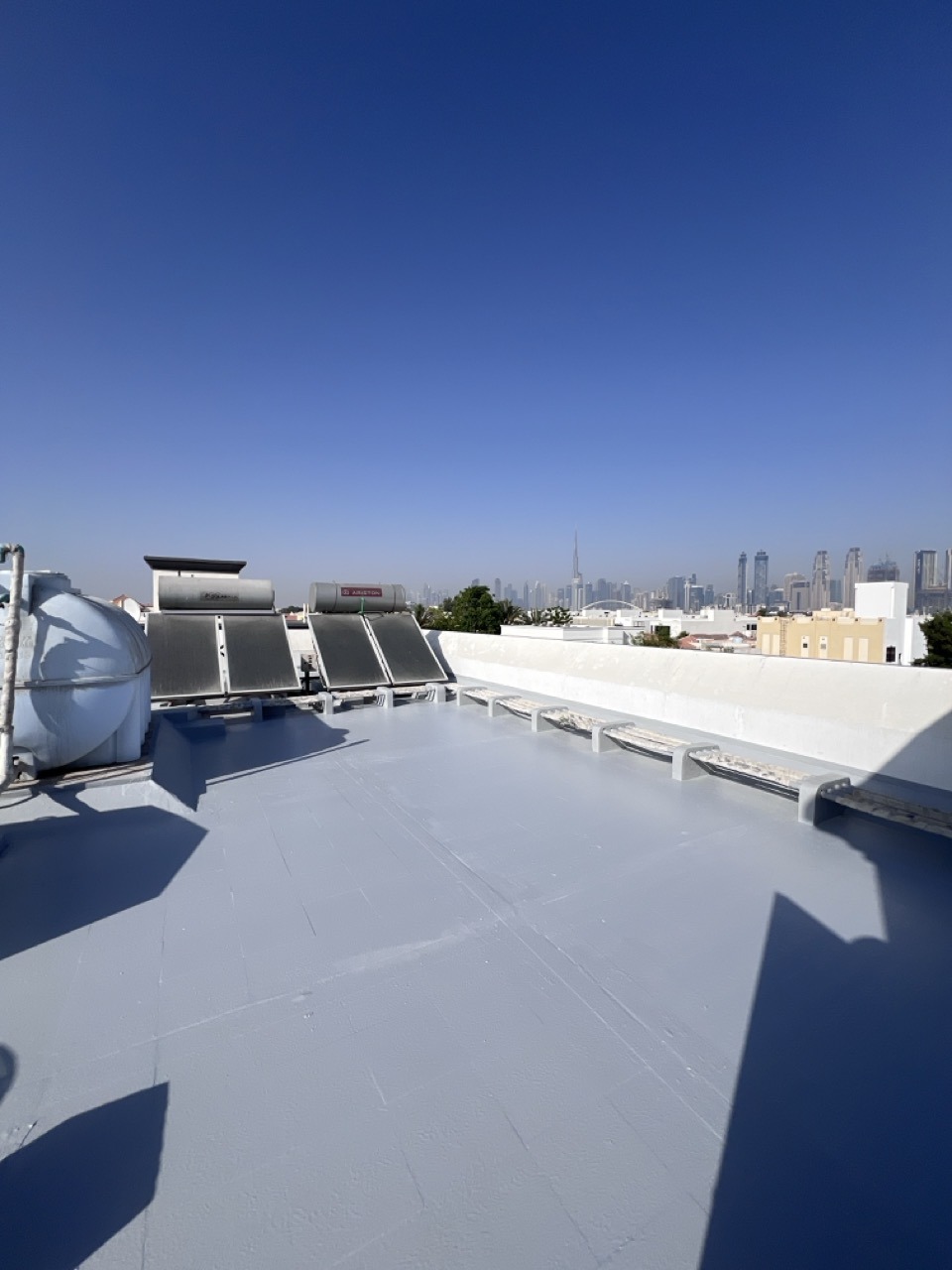
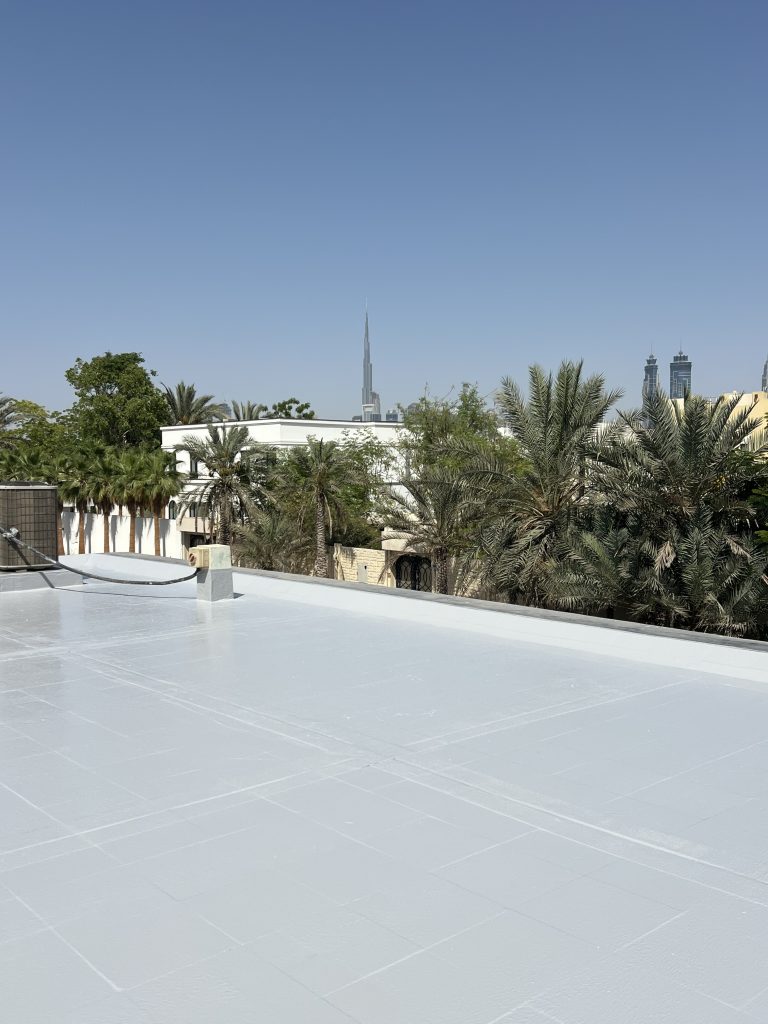
We seal UAE roofs with Frankosil 1K, a liquid-applied membrane made in Germany by Franken Systems. It is applied as a liquid and cures into one seamless sheet across the whole roof — no joints, no overlaps, no seams for water to find. That matters, because rolled sheet membranes fail first at their seams, and seams are exactly where a flat roof ponds water. You can read more about the method in our guide to what roof waterproofing involves.
Because it is built for heat and movement, a seamless liquid membrane flexes with the slab through every hot day instead of cracking against it. Every roof we seal is backed by a 20-year warranty, and we have completed 1,500+ waterproofing projects across the UAE. Keeping a roof sealed is also far cheaper than repairing water damage inside the villa — our note on villa roof maintenance covers the simple checks that catch a problem early.
Frequently asked questions
Is a water stain on the ceiling serious?
It can be. The stain itself is harmless, but it means water has already crossed your roof or a pipe and is sitting in the structure. Left alone, it damages plaster, feeds mould, and can reach the steel inside the concrete slab. The mark is a warning, not the problem.
Can a ceiling stain dry out and disappear on its own?
The wet patch may dry between rain events, but the brown mark stays and returns whenever water arrives again. A stain that keeps coming back means the source has never been fixed.
How do I know if the stain is from my roof or my AC?
A roof stain gets worse during or after rain and is usually on the top floor. An AC stain appears in hot, humid months with no rain, often right under a unit or drain line. If in doubt, a site inspection settles it.
Why does the stain come back after I paint it?
Because paint does not stop water. If the roof leak or leak source is still open, water keeps pushing minerals through the fresh paint and the stain reappears in the same spot. Fix the source first, dry the ceiling, then paint.
How long does roof waterproofing last in the UAE?
A properly applied liquid membrane is built to last many years under UAE heat, and ours carries a 20-year warranty. Lifespan depends on the product, the surface preparation, and the quality of application — which is why the work matters as much as the material.
Do you charge for an inspection?
No. A site inspection is free. Our team checks the roof, finds the true source of the stain, and explains what needs to be done before you decide anything.
Get the source found, not just the stain painted
A water stain on your ceiling is your roof asking for attention. The sooner the real cause is found, the smaller the repair. Our team inspects UAE villa roofs every day and can tell you exactly why your ceiling is staining and how to stop it.
Book a free site inspection and we will find the source for you.