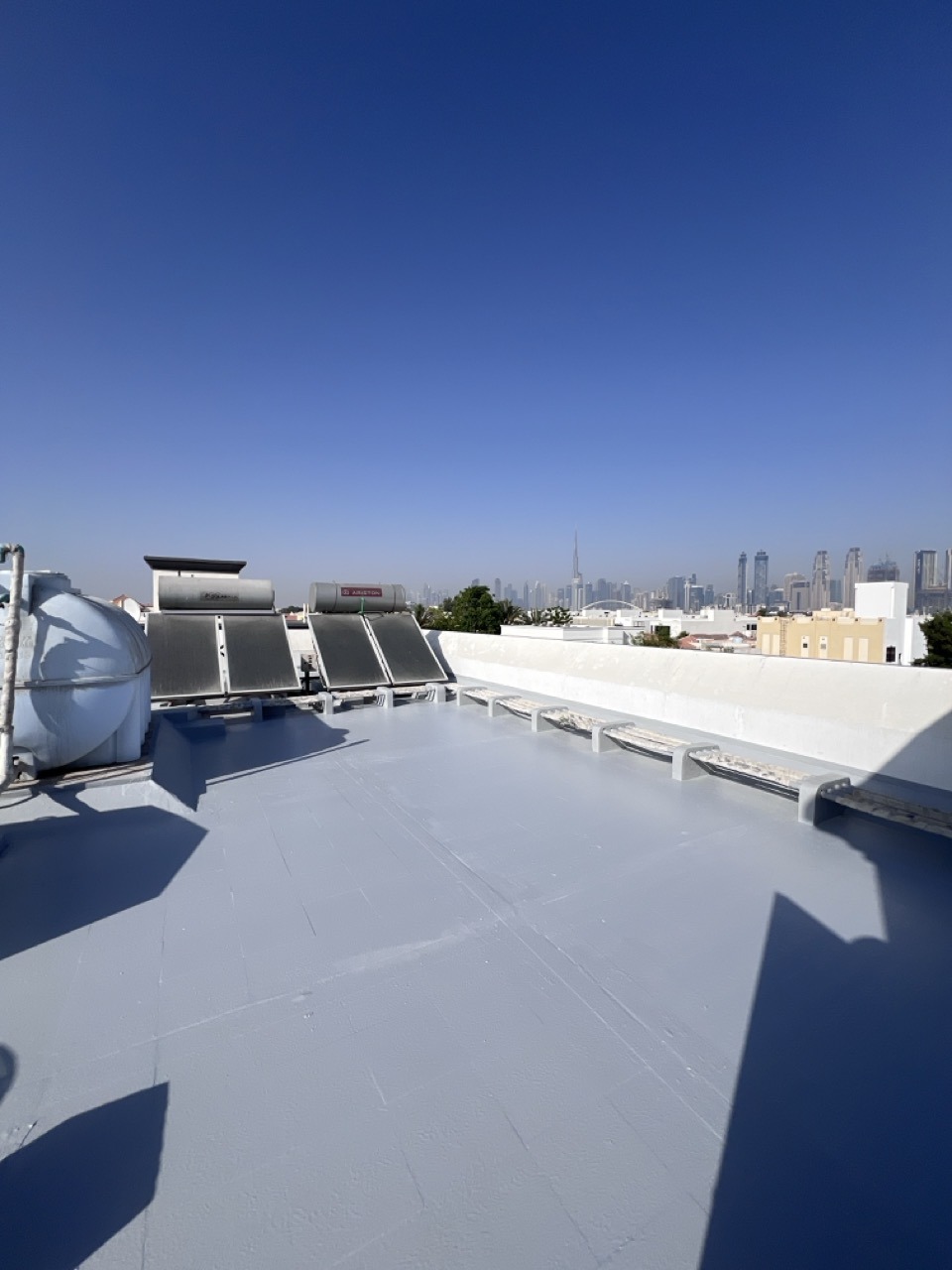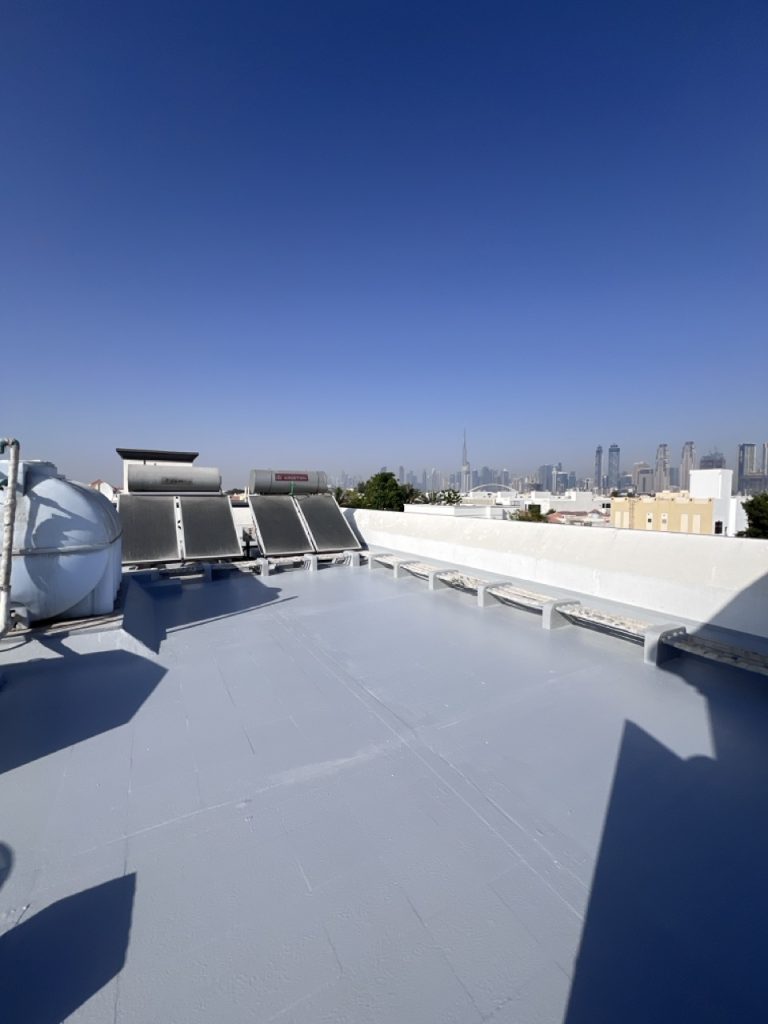
Flat roof problems are the most common reason a UAE villa owner calls us, and almost all of them trace back to one thing: heat. Nearly every villa in Dubai and Abu Dhabi sits under a flat concrete roof, and a flat roof has to work harder here than anywhere with a pitch to shed water. When something goes wrong, the water has nowhere to run, so it sits, soaks, and eventually finds its way inside. The good news is that flat roof problems in the UAE follow a small number of predictable patterns, and once you know them you can catch a fault before it reaches the ceiling.
This guide covers the flat roof issues we see most often on UAE villas, why the climate here causes them, how to spot the early signs, and what actually fixes the problem for good.
The flat roof problems we see most in the UAE
Across thousands of inspections, the same short list comes up again and again:
- Ponding water that stays on the roof long after rain.
- Cracks in the surface from constant heat movement.
- Blistering and lifting of an old membrane that has lost its bond.
- Failed seams and joints in rolled sheet waterproofing.
- Poor drainage around outlets and parapet walls.
- Standing water from AC condensation and roof irrigation, not only rain.
Each one lets water reach the concrete slab. On a flat roof there is no slope to help, so a small fault turns into a leak faster than most owners expect.
Ponding water: the number one flat roof problem
Ponding is water that is still sitting on the roof more than a day or two after rain. A flat roof is never perfectly flat by design — it should have a slight fall towards the drains. When that fall is too shallow, or a drain is blocked, water collects in low spots and stays there.
Standing water is a problem even when the roof is not yet leaking. It presses down on the waterproofing, works its way into the smallest cracks, and in UAE heat it evaporates and leaves behind salts and grime that break the surface down over time. A pond that returns in the same place after every rain is one of the clearest signs a flat roof needs attention.
Cracks and thermal movement
This is where the UAE climate does its real damage. A flat concrete roof heats up all day and cools at night. Roof surfaces in the UAE reach 80 °C in summer, then drop sharply after dark. The slab expands with the heat and contracts as it cools, every single day.
A waterproofing layer that cannot move with the slab loses. Hard, brittle coatings and aged membranes crack under that constant push and pull. Once a hairline crack opens, it widens a little more with each heat cycle, and the next rain pushes water straight through it into the concrete. This is why many roofs that looked fine for years fail suddenly after one heavy storm — the cracks were already there, waiting.
Why flat roofs fail faster in the UAE
Generic roofing advice is written for cold, wet climates with pitched roofs, attics and gutters. None of that describes a UAE villa. Here the pressure is different, and it is severe.
The heat is the first cause. The rain is the second — rare, but heavy and sudden when it arrives. The National Center of Meteorology records how quickly a long dry spell can turn into an intense downpour, and a flat roof that has spent months baking is at its most brittle exactly when that water comes. Add year-round AC condensation dripping onto the slab and constant irrigation on planted terraces, and a UAE flat roof is under water pressure almost every month, not just in a short rainy season.
The result is that a waterproofing system chosen for a milder climate can fail within a few short years here. A system built for heat and movement is a different thing entirely.
Other flat roof issues to watch for
Beyond ponding and cracks, a few more problems come up often on UAE villas:
- Blistering and lifting. Bubbles under a membrane mean it has lost its bond to the slab. Trapped air and moisture expand in the heat, the surface lifts, and water gets underneath.
- Open seams. Rolled sheet membranes are joined with overlaps, and those seams are the weakest point. Heat movement and ponding water attack them first, which is where many sheet-membrane roofs begin to leak.
- Blocked or badly placed drains. Sand, leaves and debris clog roof outlets, and drainage that was never sloped correctly leaves water with nowhere to go.
- Damage around parapets and penetrations. The upstands where the roof meets a wall, and the points where pipes and AC lines pass through, are common failure spots because the waterproofing is hardest to seal there.
How to spot flat roof problems early
A flat roof gives warning signs before the ceiling stains. A few simple checks catch most problems:
- Look for standing water. Walk the roof a day or two after rain. Any area still holding water is a low spot or a blocked drain that needs fixing.
- Check the surface for cracks. Fine cracks, a chalky or brittle coating, or a membrane that feels hard and lifeless all point to heat damage.
- Inspect the edges and outlets. Look closely where the roof meets parapet walls and around every drain and pipe. These fail before the open field does.
- Watch the top-floor ceilings. A faint stain, a damp patch, or bubbling paint on an upper ceiling often means the roof above it is already letting water through.
If you see any of these, the roof is talking to you. Acting on a small fault is always cheaper than repairing water damage inside the villa. Our note on villa roof maintenance covers the simple seasonal checks that catch these early, and if a stain has already appeared, our guide to a water stain on the ceiling explains how to trace the source.
How to fix flat roof problems for good
Patching a single crack rarely lasts, because the same heat that opened one crack is working on the whole surface. The reliable fix for a UAE flat roof is a waterproofing system built for the two forces that break roofs here: heat and movement.
We seal UAE roofs with Frankosil 1K, a liquid-applied membrane made in Germany by Franken Systems. It goes on as a liquid and cures into one seamless sheet across the entire roof — no overlaps, no joints, no seams for water to find. Because it is seamless, it removes the single weakest point of a sheet membrane, and because it stays flexible, it moves with the slab through every hot day instead of cracking against it. It also bonds fully to the concrete, so water cannot travel underneath it the way it does beneath a lifted sheet.
Every roof we seal is backed by a 20-year warranty, and we have completed 1,500+ waterproofing projects across the UAE. For a fuller picture of what the work involves, see our guide to roof waterproofing in Dubai, and if your roof is already leaking, our guide to a leaking roof in Dubai explains what happens next.
Frequently asked questions
What is the most common flat roof problem in the UAE?
Ponding water and heat cracking are the two we see most. A flat roof holds water where the slope is too shallow or a drain is blocked, and the constant heat opens cracks in an aged or brittle waterproofing layer. The two often work together — standing water finds a heat crack and pushes through it.
Why does my flat roof leak only after heavy rain?
Because the cracks are already there from months of heat, but they only let water through when there is enough of it. UAE rain is rare and sudden, so a roof can look fine for a long time and then leak the first time a real storm arrives.
Is ponding water on a flat roof a serious problem?
Yes, even before it leaks. Standing water adds weight, presses on the waterproofing, seeps into small cracks, and breaks the surface down over time. A pond that keeps returning in the same spot means the fall or the drainage needs correcting.
Can flat roof cracks be repaired, or does the whole roof need redoing?
It depends on the condition of the surface. A single isolated crack can sometimes be sealed, but if the coating is brittle and cracking in several places, patching only buys a little time. A seamless membrane over the whole roof is what stops the pattern for good. A site inspection tells you which case you are in.
How long should a flat roof waterproofing system last in the UAE?
A system built for the climate should last many years under UAE heat, and ours carries a 20-year warranty. Systems chosen for milder climates often fail within a few years here. The material, the surface preparation, and the quality of application all decide how long it lasts.
Do you charge for a flat roof inspection?
No. A site inspection is free. Our team checks the roof, finds the real cause of the problem, and explains what needs to be done before you decide anything.
Get your flat roof checked before the next rain
Flat roof problems only get more expensive the longer they wait. Ponding, cracks and open seams are all fixable — the sooner they are found, the smaller the repair. Our team inspects UAE villa roofs every day and can tell you exactly what is wrong with yours and how to stop it.
Book a free site inspection and we will check your flat roof for you.